
Clay Pots and Earthenware Cooking — A Complete India Revival Guide
Introduction
Clay pot cooking is India’s oldest culinary tradition and is experiencing a remarkable renaissance among health-conscious families. Earthenware is the ultimate zero-chemical, zero-plastic, mineral-rich cooking vessel — and the food it produces is scientifically better in taste and nutrition.
The Science Behind Clay Pot Cooking
Clay pots are porous — they allow slow, even heat distribution and gentle moisture evaporation. This creates a pressure-like effect that makes food more tender and flavorful. Minerals from unglazed clay leach slowly into food in beneficial quantities. Studies show that cooking in clay pots preserves more antioxidants in food compared to metal cookware.
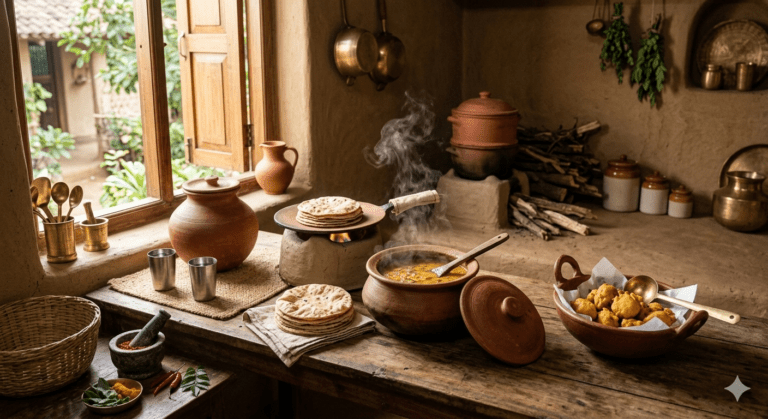
Traditional Indian Uses for Clay Cookware
Mitti ka handi — Slow-cooked dals and mutton biryani
Clay tawa — Earthy-flavored rotis with better texture
Matka — Water storage with natural cooling
Surahi — Refrigeration-free cool water storage
Clay kadhai — Deep frying with better oil temperature control
Nali (clay pipe) — Traditional steam cooking
How to Cure a New Clay Pot
Soak the new pot in water for 24 hours. Rub the inside and outside with oil. Heat slowly over a low flame for 30 minutes. Cool completely. Repeat once. This process seals the pores and prevents cracking during cooking. Never place a cold clay pot on a hot flame — always heat gradually.
Where to Buy Clay Cookware in India 2025
Amazon India stocks clay cookware from brands like Zishta, Craftsman, and regional artisan sellers. Local Indian markets — particularly in Tamil Nadu, Rajasthan, Uttar Pradesh, and West Bengal — have excellent clay pot artisans. Supporting local potters directly is the most eco-friendly and community-supporting option.