
Stainless Steel vs Plastic Storage Containers — Which Wins for Indian Kitchens?
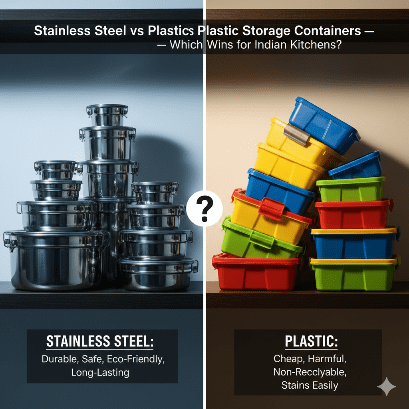
Indian kitchens rely heavily on storage containers — from dabbas packed for office lunch to large containers storing lentils, spices, and pickles. The big debate: should you use stainless steel or plastic? In this detailed comparison, we break down every important factor to help you make the right choice for your family.
The Quick Answer
For most Indian kitchen needs — especially for hot food storage, reheating, and long-term use — stainless steel containers are the clear winner. However, plastic containers still have a place for cold storage and certain use cases. Read on for the full picture.
Safety Comparison: Which is Safer for Indian Food?
Plastic Containers
Many plastic containers contain BPA (bisphenol A) and other chemicals that can leach into food. The risk increases significantly when:
Food is stored hot in plastic containers
Plastic containers are heated in microwave ovens
Containers are old, scratched, or discoloured
Acidic foods like tamarind, lemon, or tomato-based curries are stored in them
Even ‘BPA-free’ plastics may contain other plasticisers that are not fully studied for long-term safety.
Stainless Steel Containers
Food-grade stainless steel (18/8 or 304-grade) is completely non-reactive. It does not leach any chemicals into food regardless of temperature, acidity, or storage duration. This makes it the safest option for storing Indian food — including hot dals, curries, pickles, and chutneys.
Durability: Which Lasts Longer?
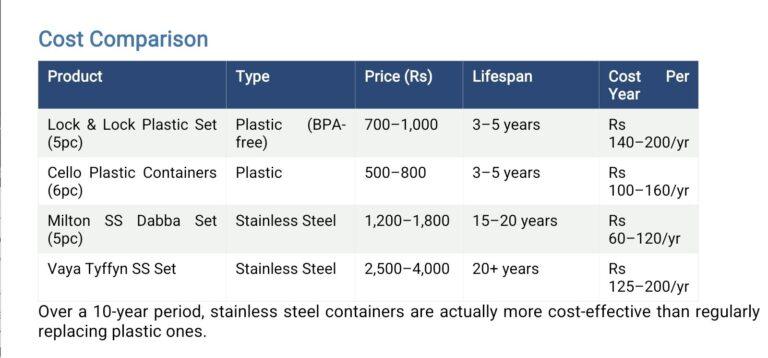
A good quality stainless steel dabba can last 10–25 years with proper care. Plastic containers, even premium ones, degrade within 2–5 years — becoming cloudy, cracked, and scratched. The scratches in plastic containers harbour bacteria and also increase chemical leaching.
Verdict: Stainless steel wins decisively on durability.
Performance for Indian Cooking
Hot Food Storage
Stainless steel is far superior for storing fresh, hot food like dal, sabzi, or rice. Plastic containers should never be used with hot food due to chemical leaching risks.
Microwave Use
Plastic containers (microwave-safe ones) can be used in microwaves. Stainless steel cannot. If microwave reheating is important to you, keep a few microwave-safe glass containers for this specific purpose.
Fridge Storage
Both work well in the refrigerator. Stainless steel keeps food fresh longer due to its non-porous surface.
Pickle and Chutney Storage
Stainless steel is far better for storing acidic Indian preparations — pickles, lemon chutneys, tamarind-based dishes. Plastic containers absorb odours and react with acids over time.
Best Stainless Steel Container Brands on Amazon India 2025
Milton Stainless Steel Dabba Set — Best overall value, Rs 1,200–1,800
Vaya Tyffyn — Premium insulated stainless steel tiffin, Rs 2,500–4,500
Cello Stainless Steel Containers — Budget-friendly, Rs 700–1,200
Solimo by Amazon SS Dabba Set — Reliable, Rs 899–1,499
Borosil Stainless Steel Storage Set — Premium quality, Rs 1,500–2,500
Final Verdict
For the Indian kitchen, stainless steel storage containers win on every front that matters: safety, durability, long-term cost, and environmental impact. The only scenario where plastic has a marginal edge is microwave-safe reheating and even then, borosilicate glass is a better alternative.
Our recommendation: Start replacing your plastic dabbas with stainless steel containers gradually. Begin with the containers you use for hot food storage and tiffin boxes, and you will notice the difference immediately.